
First Freight Carriers (FFC) provides port-proximate Warehousing & Transloading that connects ocean, air, rail, and over-the-road freight into one smooth flow—so containers clear quickly, pallets ship accurately, and deliveries hit your must-arrive dates. Our network of insured, secure facilities near major U.S. ports and rail ramps gives you faster turns and lower total landed cost: we pull containers as release windows open, cross-dock or transload same-day when needed, and return empties to the nominated depot to avoid demurrage and per diem. Whether you need short-term storage, overflow capacity, or full palletization and labeling to a retailer’s routing guide, our teams execute standard operating procedures (SOPs) that protect product and documentation at every touch. We handle container → pallet transfers, re-pack and kitting, carton or SKU counts, photo capture at key steps, and appointment scheduling for final-mile delivery. Temperature-sensitive and special-handling freight is supported through controlled staging and rapid transfers; high-value or fragile items receive dedicated zones and chain-of-custody logs on request. Because warehousing and transloading sit in the middle of your logistics chain, we coordinate upstream drayage and downstream FTL/LTL linehaul as a single plan—aligning labor, dock windows, and carrier pickups so freight spends more time moving and less time waiting. With itemized pricing, proactive milestone updates, and one point of contact, FFC makes Warehousing & Transloading simple, predictable, and cost-effective—without last-minute surprises.
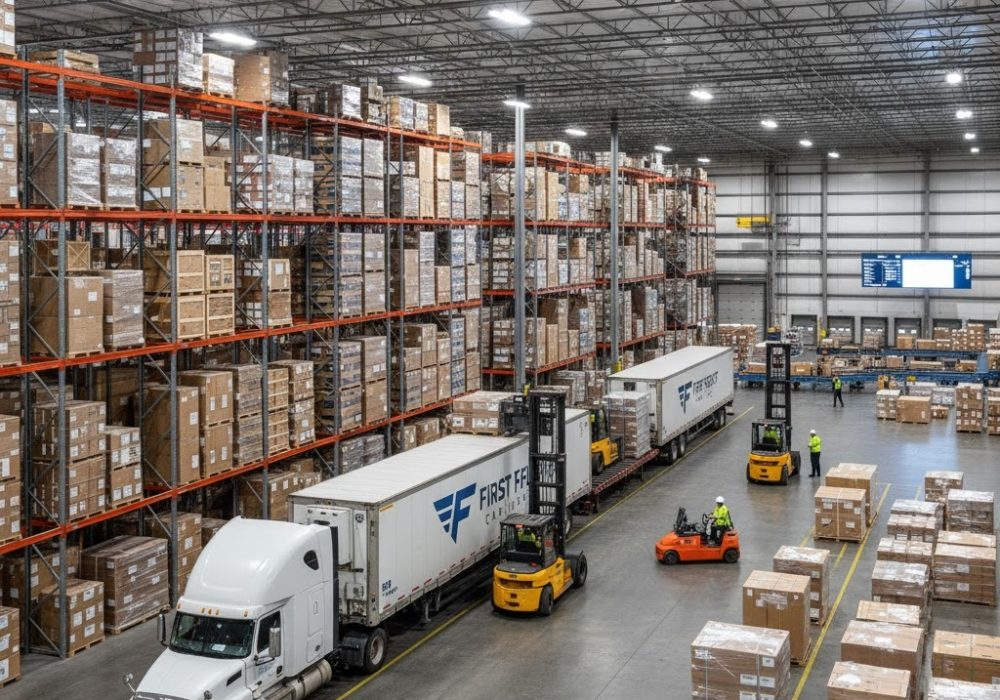
Warehousing & Transloading
How our Warehousing & Transloading process works
-
Plan & release: We verify holds and releases, align dock labor, and schedule drayage and carrier appointments.
-
In-gate & inspection: Containers arrive with seal checks; exceptions are documented with photos and notes.
-
Transload or cross-dock: We move carton or pallet freight from container to 53′ dry van or staging.
-
Value-add & prep: Palletize, re-pack, count, label, apply retailer tickets, and wrap per spec.
-
Storage (if needed): Short-term or project storage with location mapping and inventory visibility.
-
Out-gate & delivery: Empty returns to nominated depot; linehaul tendered with appointments and POD capture.
What we need to quote fast
-
Container details: size/type (20′/40′/40′HC; standard/reefer), estimated weight, and ETA/LFD
-
Scope: cross-dock only, full transloading, or storage and value-add requirements
-
Packaging plan: pallet specs, labeling, ticketing, carton or SKU counts, photo capture
-
Final-mile: FTL/LTL needs, delivery windows, special site notes (appointments, inside, liftgate)
-
Compliance: any retailer routing guides or QC criteria we must follow
Value-add options
-
Palletization & re-pack: corner boards, top caps, banding, and wrap to stabilize units
-
Labeling & ticketing: retailer UCC/EAN labels, carton IDs, PO/RDC tags, and do-not-stack cones
-
Kitting & light assembly: simple kits, inserts, or multi-SKU prep for promotions or launches
-
Counts & photos: piece counts by line and photo documentation at inbound and outbound
-
QC checks: exterior inspection, carton integrity, and basic conformity checks per SOP
Cost drivers (and how we control them)
-
Demurrage & per diem: Plan early drays, prioritize LFD-risk boxes, and return empties promptly.
-
Touch time: Engineer the workflow so cartons move once—container to pallet to outbound.
-
Accessorials: Quote flips, chassis days, and terminal fees upfront for clean budgeting.
-
Scheduling: Align labor to appointment windows; use drop trailers to smooth peaks.
-
Damage risk: Use correct pallets, protective materials, and clear SOPs to prevent claims.
Import programs & distribution
For imports, we dray from port, cross-dock SKUs by destination, and tender consolidated pallets into LTL or FTL networks with day-definite delivery to DCs or stores. For nationwide drops, we stage regional inventory and release against your purchase orders, so stores and DCs receive exactly what they need, when they need it.
Warehousing & Transloading
Frequently Asked Questions – FAQs – Warehousing & Transloading
What is the difference between cross-dock and transloading?
Cross-dock moves freight directly from inbound to outbound with minimal staging. Transloading may involve re-packing, palletizing, labeling, or splitting freight across multiple outbound trailers.
How do you prevent demurrage and per diem?
We plan early drays, clear holds quickly, prioritize boxes near LFD, and return empties to the nominated depot immediately after unload.
Can you meet retailer routing guides?
Yes—send the guide and we’ll configure ticketing, labels, carton IDs, and appointment rules into the SOP before your first load.
Do you offer short-term storage?
Yes—short-term, long-term, and project storage with mapped locations and basic inventory visibility.
How do you handle temperature-sensitive freight?
We minimize dwell, use reefer staging when required, and coordinate immediate transfer to temperature-controlled linehaul.
What proof will I receive?
Inbound and outbound photos on request, counts, BOLs with references, and POD after delivery.
Can you ship out the same day as in-gate?
Often, yes—when we have appointments booked and labor aligned; share ETA and priorities early so we can stage accordingly.