
First Freight Carriers (FFC) provides dependable, direct Full Truckload (FTL) shipping across the United States, built for shippers who want schedule control, fewer handoffs, and predictable transit. We plan your lane with realistic ETAs, secure capacity on vetted carriers, and manage every milestone—pickup, linehaul, arrival, and POD—so your freight moves dock-to-dock with minimal touch. Whether you need a dedicated run, a one-time spot move, or a multi-stop project, our team matches the right equipment (53′ dry van, flatbed, step-deck) to your freight, coordinates live load or drop trailer options, and keeps operations flowing with clear appointment scheduling. You get transparent pricing with linehaul and accessorials itemized up front, plus proactive updates that align with your warehouse hours and staffing. If your network mixes FTL, LTL, and transloading, we unify the plan, staging inventory where needed and sequencing deliveries to hit retailer or DC windows. Compliance and safety come standard: insured carriers, ELD/HOS adherence, driver qualifications, and lane-specific instructions for high-value or fragile cargo. From regional next-day runs to cross-country linehaul, FFC keeps Full Truckload shipping simple, reliable, and cost-controlled—without last-minute surprises.
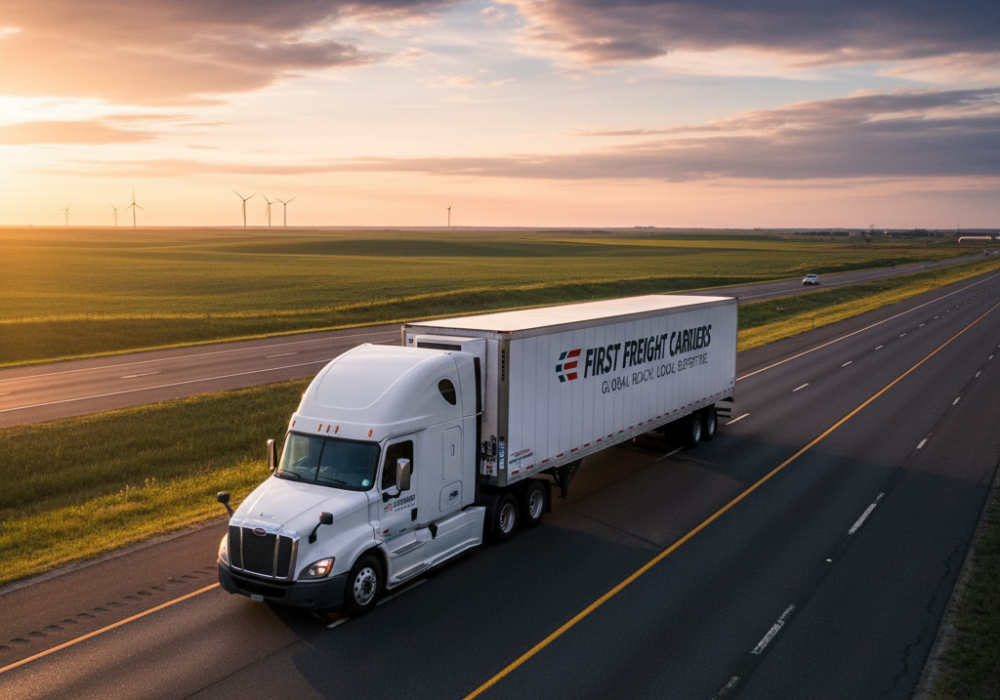
Full Truckload (FTL)
How our FTL process works
-
Plan & book: We confirm lane, equipment, dwell expectations, appointments, and realistic transit times.
-
Pickup: Carrier arrives per window; we coordinate dock instructions, seals, and BOL accuracy.
-
Linehaul: We monitor progress, manage weather or traffic exceptions, and keep you informed.
-
Delivery: On-time arrival with appointment adherence; unload instructions followed; POD captured.
-
Closeout: Final documents provided; invoice shows linehaul and accessorials itemized clearly.
What we need to quote fast
-
Origin & destination (dock hours, appointment rules, contact)
-
Commodity and any special handling (fragile, high value, temp-sensitive)
-
Pallet count / dimensions / total weight (and stackability)
-
Equipment needed (dry van, flatbed, step-deck; load securement notes)
-
Pickup window & delivery window (and must-arrive-by if any)
-
Loading type (live load vs. drop trailer) and any site constraints (yard space, tight turns)
Equipment & options
-
53′ Dry Van: palletized, case-packed, retail, e-commerce replenishment.
-
Flatbed / Step-Deck: machinery, construction materials, crated equipment, tall loads.
-
Project / Multi-stop: route planning, stop-off charges, appointment sequencing.
-
Expedited / Team: faster linehaul for time-critical moves.
-
Drop Trailer: dwell flexibility where yard space and security permit.
Cost drivers (and how we control them)
-
Appointments & dwell: Align pickup/unload windows; use drop trailers when dwell is likely.
-
Equipment availability: Book early for end-of-month/quarter; we source alternates quickly if needed.
-
Accessorials: Detention, layover, TONU, driver assist—quoted upfront wherever possible.
-
Seasonal factors: Peak retail, produce surges, and holidays—plan buffers and flexible windows.
Full Truckload (FTL) Shipping
Frequently Asked Questions Full Truck Load (FTL)
What’s the difference between Full Truckload and LTL?
Full Truckload (FTL) uses an entire trailer for one shipper and goes direct, reducing touchpoints and transit variability; LTL consolidates multiple shippers and adds terminals, which is cheaper for small volumes but slower.
How much weight can a 53′ dry van carry?
Typically up to ~45,000 lb depending on tractor, fuel, and state axle rules. We’ll confirm legal weight and routing before pickup
Can you provide a drop trailer?
Yes—where site security and yard space allow. Dwell charges may apply; we’ll quote the most economical mix versus live load.
Do you handle flatbed or oversized freight?
Yes—flatbed and step-deck are standard. For oversize, we arrange permits, escorts, and compliant routing; sometimes step-deck reduces permit needs.
What causes extra charges on truckload?
Common drivers are detention, layover, TONU, and driver assist. We minimize these with accurate windows, clear site notes, and proactive communication.
What documents do you provide after delivery?
POD, seal details (if used), photos on request, and a final invoice with linehaul and accessorials itemized.
Do you offer temperature control on FTL?
Yes, via reefer truckload when required; for mixed networks we pair reefer FTL with ambient lanes and cross-dock as needed.