
First Freight Carriers (FFC) delivers fast, reliable Drayage from port and rail terminals to your warehouse, cross-dock, or final destination anywhere in the U.S. We plan container pickups against Last Free Day (LFD), secure appointments and chassis, and coordinate returns to avoid demurrage and per diem. Whether your box is moving off a vessel, grounded in a yard, or stacked at a rail ramp, our team manages the entire handoff—terminal release, out-gate, delivery, live unload or drop, transload if needed, and in-gate return—while you receive proactive status updates at every milestone. Need reefer power, overweight handling, or hazmat? We arrange the right equipment (gensets, tri-axle chassis, permits) and ensure compliant handling under UIIA, TWIC, and carrier rules. Because drayage sits between ocean/rail and over-the-road trucking, we tie it all together with warehousing & transloading and FTL/LTL delivery for a clean, end-to-end flow—fewer handoffs, fewer fees, and fewer surprises.
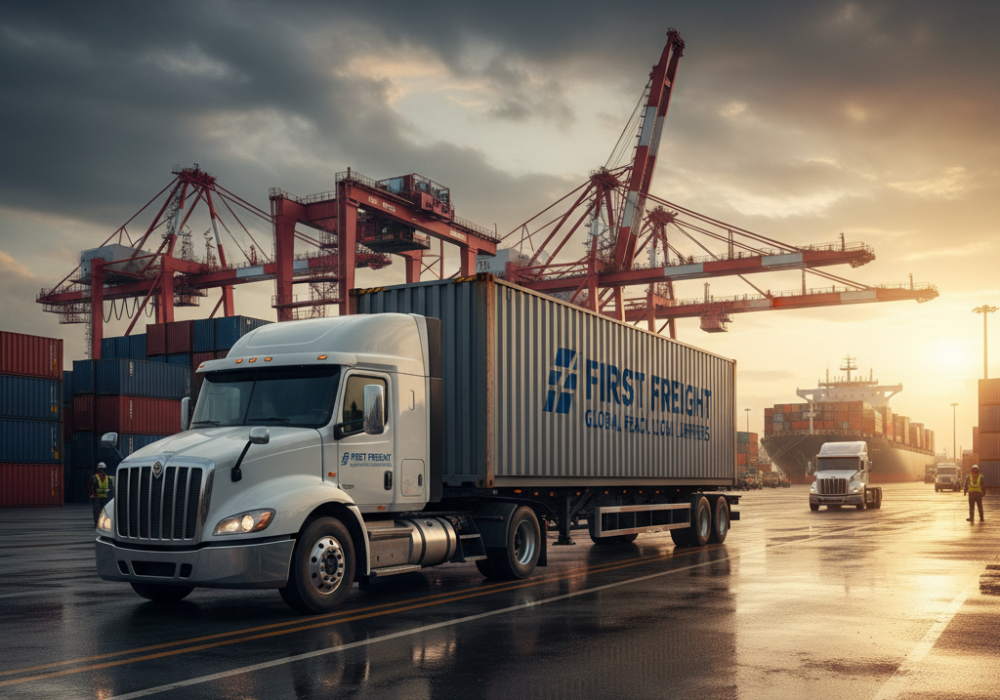
Drayage
How our Drayage process works
-
Pre-release & planning: We verify terminal holds (steamship line, customs, agriculture, TMF/PierPass), confirm LFD, and book the earliest viable appointment with a chassis plan.
-
Out-gate pickup: Driver arrives with the correct chassis (tri-axle if heavy), clears any holds, and pulls the box out of the terminal or ramp.
-
Delivery options:
• Live unload with quick turn, or
• Drop & hook so you can unload on your schedule, or
• Transload to dry van/flatbed for faster onward delivery or consolidation. -
Return & compliance: We return the empty to the nominated depot to avoid per diem, or reposition to your instruction; photos and POD provided.
-
Exception handling: If a box is overweight, reefer, hazmat, or delayed by weather/rollovers, we re-plan the slot, equipment, and route, then keep you updated.
What we need to quote fast
-
Container number (or B/L) and size/type (20′ / 40′ / 40′HC; standard, reefer, hazmat)
-
Terminal/ramp and steamship line/rail carrier
-
Pickup window and LFD (if known)
-
Delivery address (dock hours, appointment rules, liftgate/inside if needed)
-
Unloading plan (live vs. drop), weight (gross), and any special requirements (overweight permits, pallet exchange, photos, count)
Ports & ramps we serve most
LA/Long Beach, Oakland, Seattle/Tacoma, Houston, Dallas/Fort Worth ramps, Savannah, Charleston, Norfolk, New York/New Jersey, Philadelphia, Baltimore, Chicago ramps (Joliet/Elwood), Atlanta, Miami, and others—ask for coverage if your lane isn’t listed.
Cost drivers (and how we minimize them)
-
Demurrage (terminal storage): We schedule early, clear holds fast, and prioritize boxes nearest LFD.
-
Per diem (equipment): We plan for quick unload or drop options and return to the correct depot promptly.
-
Chassis & accessorials: We right-size chassis days, avoid flips when possible, and itemize all terminal fees upfront.
-
Appointments & congestion: We monitor slot releases, use late-gates/night gates when available, and keep a standby plan.
-
Overweight routes: We deploy tri-axle chassis, overweight permits, and heavy-corridor routing where allowed.
Equipment & special cargo
-
Standard & High-Cube 20′/40′ containers
-
Reefers: genset power, pre-trip checks, temperature logging on request
-
Overweight: tri-axle chassis, permits, scale tickets
-
Hazmat: compliant placarding, paperwork, and routing
-
Transloading: palletization, stretch/shrink wrap, photo capture, SKU counts
Why shippers choose FFC for Drayage
-
LFD-driven planning that reduces storage and per diem
-
Terminal expertise across major ports and ramps
-
Single point of contact coordinating drayage, transload, and final mile
-
Transparent quotes with terminal, chassis, and accessorials separated
-
Proactive communication at release, out-gate, delivered, and in-gate return
Drayage Shipping
Frequently Asked Questions Drayage
What’s the difference between demurrage and per diem?
Demurrage is terminal storage when a container sits past free time before pickup. Per diem is the daily fee for holding the steamship line’s container beyond allowed days after pickup. We plan to avoid both
Live unload or drop—what’s better?
Live unload avoids extra chassis days if you can unload quickly (often 1–2 hours). Drop gives your team flexibility but can incur chassis/per diem unless planned. We’ll recommend the cheapest option for your situation.
Can you handle overweight imports?
Yes—using tri-axle chassis, route permits, and heavy-corridor roads where applicable. We’ll advise if transloading to dry van saves money vs. permits.
How do reefer drays work?
We provide genset power and temperature checks at pickup, verify settings, and deliver promptly with minimal door-open time.
What causes appointment delays?
Terminal congestion, hold releases, and limited time slots. We monitor windows, use night/later gates when available, and re-book fast if a rollover occurs.
What proof do I receive?
Release confirmations, out-gate/in-gate details, POD, photos on request, and a final invoice with itemized fees.
Can you transload to reduce inland costs?
Absolutely. Transloading to 53′ dry van often lowers inland linehaul cost and speeds delivery to distribution centers.