
First Freight Carriers (FFC) provides dependable Less Than Truckload (LTL) Shipping for shippers who need nationwide reach, predictable transit, and cost control on palletized freight that doesn’t require a full trailer. Our operations team plans each move around real carrier performance on your lanes, then books the right service (standard or guaranteed) with accurate freight class or density-based pricing so the quote you approve matches the invoice. We coordinate every milestone—pickup appointments, terminal linehaul, interline handoffs if applicable, and final-mile delivery—while monitoring exceptions in real time and keeping you informed from PRO assignment to POD. Because details drive LTL success, we focus on the things that prevent reweighs, reclasses, and delays: exact dimensions and weight per handling unit, correct NMFC/freight class or density calc, clear BOL and label placement, and the right accessorials (liftgate, residential, limited access, inside, appointment) declared in advance. Packaging is equally critical; we help you spec pallets, corner boards, top caps, banding, and stretch wrap so freight moves safely through terminal networks with minimal touch.
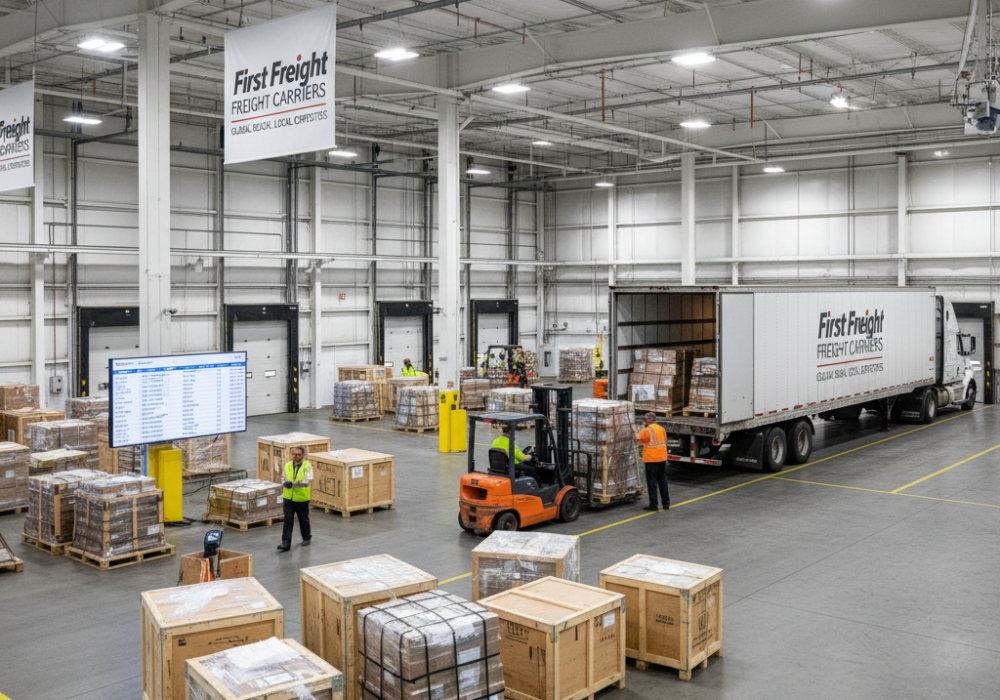
Less Than Truckload (LTL) Shipping
When LTL is the right fit, it offers the best mix of speed and cost for 1–10 pallets (and sometimes up to half a trailer), but FFC also guides you when Volume LTL, Partial Truckload, or Full Truckload (FTL) is smarter. For heavier or bulky freight—tall stacks, long pieces, or high linear feet—we’ll compare VLTL or partial options to avoid cubic-capacity or over-length charges, or pivot to FTL when a direct, single-shipper move is more economical. For international and coastal imports, we routinely transload from ocean containers into LTL for distributed deliveries: we dray your box from port, cross-dock and palletize, then tender consolidated pallets into the LTL network for on-time arrivals at DCs or retail locations. If timelines are tight, we can split SKUs across Air Freight for urgent pieces and LTL for the balance; if appointments or routing guides are strict, we use guaranteed or day-definite services and schedule windows that match site capacity and labor.
Compliance and claims prevention are built into our process. We document condition at pickup when needed, request exceptions on visible damage, and can add excess liability coverage on high-value moves. On temperature-sensitive freight, we’ll stage early-morning pickups and short cross-dock transits, or switch to reefer truckload when ambient LTL risk is too high. For urban or constrained sites, we plan liftgates, driver assist, inside delivery, and limited-access well ahead of time and include them in the quote. You’ll get transparent pricing that itemizes linehaul and accessorials, proactive updates at pickup, terminal arrivals, out-for-delivery, and delivery confirmation, and a single point of contact who understands your lanes, products, and service-level expectations. That’s how FFC keeps Less Than Truckload shipping simple, predictable, and cost-effective—without last-minute surprises.
How our LTL process works
-
Plan & book: We compare carrier service maps and performance on your lanes, then secure standard or guaranteed service with realistic ETAs.
-
Prepare freight: We confirm dimensions, weight, class/density, labels, and packaging (palletization, wrap, banding, top caps) to prevent reweigh/reclass.
-
Pickup: We schedule the window, confirm accessorials (liftgate, limited access), and issue a correct BOL with reference fields.
-
Linehaul: We monitor terminal transfers, interline moves if any, and exceptions; we escalate delays before they become missed dates.
-
Final mile: We align delivery appointments with site capacity; drivers follow site notes and deliver safely.
-
Closeout: You receive POD, photos on request, and a clear invoice with linehaul and accessorials itemized.
What we need to quote fast
-
Origin ZIP and destination ZIP/address (dock hours, appointment rules)
-
Handling units (pallet count), exact L×W×H per pallet, and total weight
-
Freight class/NMFC or density if unclassified; stackable vs. non-stackable
-
Accessorials needed: liftgate, residential, limited access, inside, driver assist, appointment
-
Ready date, required delivery date, and any guaranteed or day-definite needs
-
Insurance value if excess coverage is requested
Packaging & palletization best practices
-
Use 48×40, four-way pallets in good condition; no broken deck boards.
-
Keep freight inside pallet footprint; use corner boards and top caps for stability.
-
Band heavy items to pallets and stretch wrap to the base with 4–6 revolutions.
-
Label two adjacent sides with ship-to, PRO, PO, and piece count; place BOL in pouch.
-
Keep stack height safe for terminals; mark DO NOT STACK only when absolutely necessary.
Cost drivers (and how we control them)
-
Dimensions & density: Accurate dims prevent reweighs and density reclasses; we share DIM guidance.
-
Accessorials: Declare liftgate, limited access, inside, driver assist, and appointments on the quote.
-
Linear feet / cubic capacity: For large footprints, we compare VLTL or partial TL to reduce cost.
-
Over-length & special handling: Identify 8–12 ft pieces early; we plan carriers that accept them.
-
Guaranteed service: Use only when needed; we balance cost vs. service to hit must-arrive dates.
When to choose LTL vs. Volume LTL vs. Partial TL vs. FTL
-
LTL: 1–6 pallets (sometimes up to 10), moderate weight, flexible date.
-
Volume LTL: 6–12 pallets, high weight or linear feet, cheaper than standard LTL.
-
Partial TL: 8–16 pallets using shared trailer space, faster than LTL on some lanes.
-
FTL: One shipper, full trailer, direct transit, best for time-sensitive or fragile freight.
Pool distribution & imports
For imports, we dray the container from port, transload to pallets, and tender LTL to regional DCs. For domestic pool distribution, we consolidate POs and pool-point them to reduce last-mile cost and cycle time.
Less Than Truckload (LTL) Shipping
Frequently Asked Questions – FAQs Less Than Truckload (LTL) Shipping
What is Less Than Truckload (LTL) Shipping?
Less Than Truckload (LTL) Shipping moves palletized freight that doesn’t require a full trailer, using a terminal network to combine multiple shippers’ freight efficiently.
How do carriers calculate LTL pricing?
Pricing is based on freight class or density, dimensions, weight, lane, and accessorials; the greater your footprint or special handling, the higher the cost.
How do I avoid reweighs and reclasses?
Provide exact L×W×H and weight per pallet, correct class or density, and clear BOL notes; we validate details before tendering.
Can you guarantee a delivery date?
Yes—most carriers offer guaranteed or day-definite service for a surcharge; we use it only when required to control cost.
Do you handle residential or limited-access deliveries?
Yes—with the right accessorials declared: liftgate, limited access, inside, driver assist, and appointment scheduling.
When is Volume LTL or Partial TL cheaper?
When pallets consume many linear feet or exceed cubic capacity triggers; we compare VLTL and partial TL to cut cost and improve transit.
Can you transload to reduce inland costs?
Absolutely—We dray, cross-dock, and tender LTL to DCs or stores with appointment scheduling and labeling to spec.