
First Freight Carriers (FFC) provides safe, on-time Flatbed Shipping for machinery, building materials, steel, lumber, crates, and other freight that won’t fit a standard van. We match your load to the right open-deck equipment—standard flatbed, step-deck (single-drop), or double-drop/lowboy—so height, length, and weight clear legally without last-minute rework. Before pickup, our team confirms dimensions, center of gravity, lift points, and securement; books the correct tarp kit (4′/6′/8′ lumber or steel tarps); adds edge protection, chains, binders, straps, and V-boards; and plans loading with cranes or forklifts as needed. For oversize or overweight moves, we handle permits, route surveys, and pilot/escort cars where required, checking tunnel/bridge restrictions, construction zones, curfews, and state-by-state rules. Jobsite deliveries are scheduled with realistic arrival windows, ground conditions verified, and driver PPE notes included. If your program mixes flatbed, step-deck, and van, we coordinate the plan end-to-end—transloading, multi-stop routing, and appointment sequencing—so crews and cranes are ready when trucks arrive. Quotes itemize linehaul, permits, escorts, tarping, detention, and layovers, and you’ll get proactive updates from dispatch to POD. That’s how FFC keeps Flatbed Shipping predictable, compliant, and cost-controlled—without last-minute surprises.
Flatbed Shipping
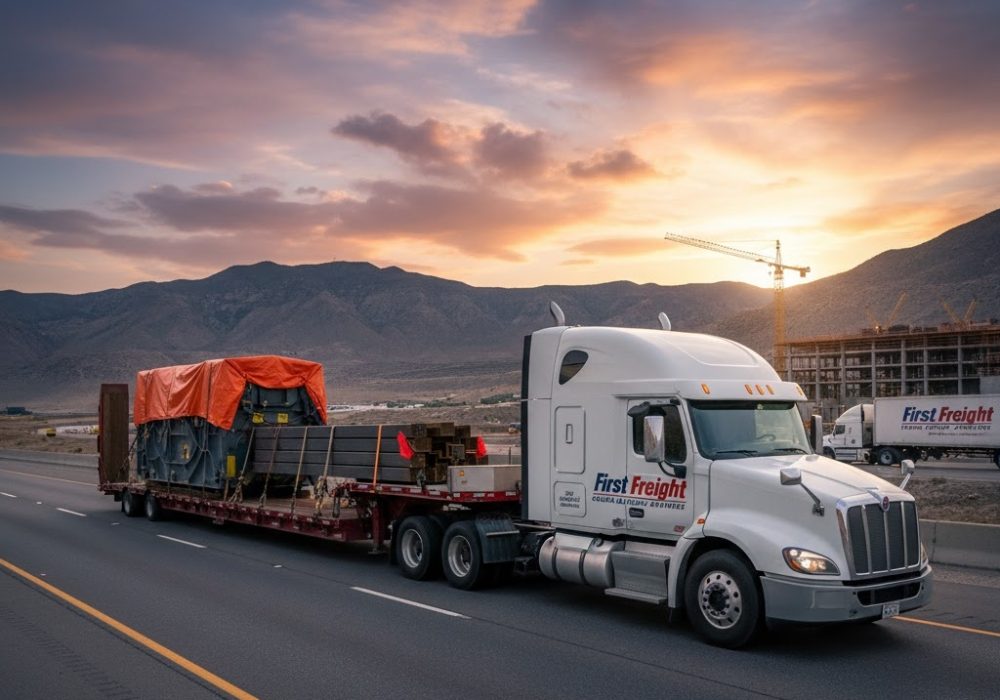
Flatbed Shipping
How our Flatbed process works
-
Plan & verify: Confirm dimensions, weight, stack points, securement and tarp needs, and site access.
-
Book & brief: Assign vetted open-deck carriers; share loading SOW, PPE, and site rules.
-
Pickup: Driver checks piece count, applies chains/straps, adds edge protection, and tarps to spec.
-
Linehaul: Legal route with permit compliance; we monitor weather, wind, and curfews.
-
Delivery: Crane or forklift timing aligned; exceptions documented; photos on request.
-
Closeout: POD, scale tickets if applicable, and an invoice with accessorials itemized.
What we need to quote fast
-
Origin & destination with onsite contact and dock/crane notes
-
Dimensions (L×W×H per piece) and total weight
-
Equipment (flatbed, step-deck, double-drop) and tarp requirements
-
Securement preferences (chains vs. straps) and edge protection needs
-
Pickup window and must-arrive date; jobsite hours and ground conditions
-
Oversize/overweight details and any required permits/escorts
Equipment & typical use cases
-
Flatbed (48′/53′): palletized building materials, bundled steel, skids, crates.
-
Step-Deck: taller machinery or crated equipment needing lower deck height.
-
Double-Drop/Lowboy: very tall loads; combine with RGN by arrangement if needed.
-
Tarp kits: 4′/6′/8′ lumber and steel tarps; smoke tarps on request.
-
Securement: chains/binders, ratchet straps, corner/edge guards, V-boards, dunnage.
Cost drivers (and how we control them)
-
Permits & escorts: We route early and stage paperwork to prevent delays.
-
Weather & wind: We build buffers for high-wind corridors and storm fronts.
-
Tarping labor: We quote tarps only when needed and specify size precisely.
-
Jobsite dwell: We coordinate crane windows and staging space to cut detention.
-
After-hours restrictions: We plan curfew windows and night-move rules by state.
Flatbed Shipping
Frequently Asked Questions (FAQs) – Flatbed Shipping
Flatbed vs. step-deck vs. double-drop—what’s the difference?
Flatbed is standard open-deck; step-deck has a lower deck for taller freight; double-drop/lowboy has a very low center deck for extra height clearance.
Do I need tarps for my load?
If product must be protected from weather or road debris, yes. We’ll specify steel or lumber tarps and the correct coverage.
How do you secure my cargo?
With chains/binders or ratchet straps per commodity; we add edge protection/V-boards to prevent strap damage and shifting.
Can you handle oversize or overweight permits?
Absolutely—we arrange state permits, escorts, and legal routing, and advise when a different trailer reduces permit cost.
Do you coordinate cranes or forklifts?
Yes—tell us lift capacity and timing; we schedule windows so crews and trucks align.
What documents do I receive post-delivery?
POD, photos on request, and any scale tickets; invoices clearly separate linehaul and accessorials.
Can you split a large project into multiple staged deliveries?
Yes—we plan multi-stop and phased deliveries with staging areas and time-phased ETAs.